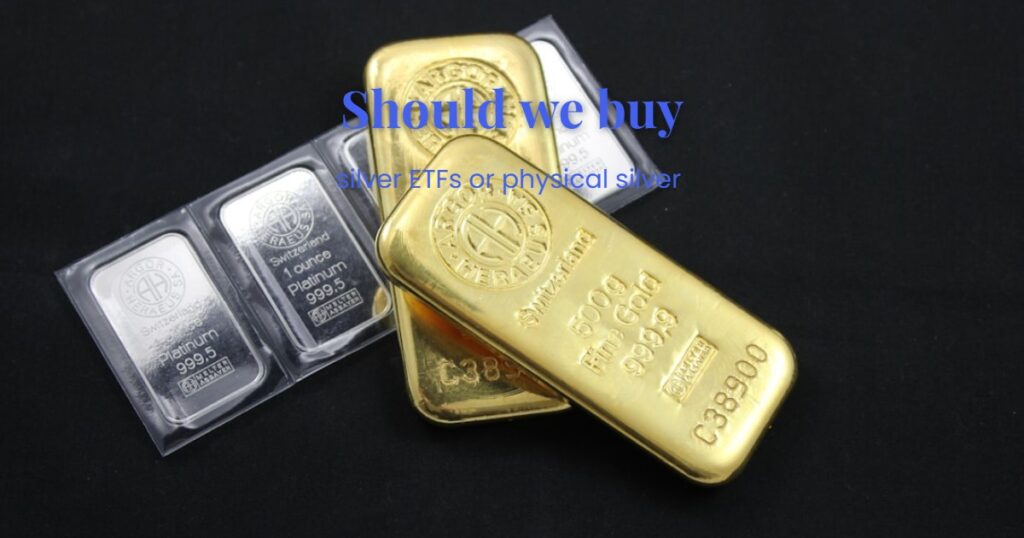

At current record prices, silver is a high‑volatility trade rather than a low‑risk bargain, so the better question is not “ETF or physical?” but “how much silver, if any, fits my portfolio—and in what form?” For most investors, if you still want exposure after this spike, silver ETFs usually make more sense than large physical purchases, and any allocation should be small and staggered over time.

Big picture: where silver is right now
- Silver in India has just hit record highs around ₹2.87–2.90 lakh per kg, after a sharp rally driven by safe‑haven flows and strong industrial demand.
- Analysts see a broadly bullish 2026 outlook, but they also highlight that silver’s price swings can be 2–2.5x more volatile than gold, and prefer a “buy on dips” strategy instead of chasing fresh peaks.
- Research on optimal portfolios suggests silver is usually a small satellite allocation—often around 3–6% of a diversified portfolio at most, with gold and equities doing the heavy lifting.
So yes, silver has a case—but only as a small, high‑beta satellite, not a core holding.
Silver ETF vs physical silver: key differences
Silver ETFs (on NSE/BSE)
Pros:
- High liquidity – can be bought/sold quickly through your demat account like any other ETF.
- No storage/insurance issues – you don’t worry about lockers or theft; the fund handles custody.
- Better pricing & transparency – tracks domestic silver price with live NAV; no making charges or typical jeweller spreads.
- Easy to size & rebalance – you can invest small amounts (e.g., SIP style) and rebalance with your equity/debt allocation.
Cons:
- Expense ratio – small annual management fee that slightly reduces returns vs raw spot silver.
- Counterparty/structure risk – small but non‑zero risk related to the fund structure and custodians, though regulated funds are tightly supervised.
Physical silver (coins, bars, jewellery)
Pros:
- Tangible asset – you own something you can hold and store yourself; no fund or broker risk.
- No ongoing management fee – once you’ve bought it, there’s no annual AMC.
- Psychological comfort – useful if you value “real” metal for extreme scenarios or gifting.
Cons:
- Storage & security – needs lockers or home safes, plus insurance and safety concerns.
- Lower liquidity & higher spreads – selling can involve negotiating with jewellers/dealers and accepting lower “buy‑back” rates.
- Premiums & making charges – coins/bars often trade above spot; jewellery adds making/wastage charges you rarely recover.
Most recent comparisons for Indian investors conclude that if convenience, transparency and flexibility are your priorities, silver ETFs are generally better, while physical silver makes sense in smaller, long‑term, “sentimental” or emergency‑reserve amounts.
So what should you do right now?
Given record prices and your profile as an active markets and tools person, a rational framework would be:
- Decide “how much”, not “whether silver is hot”
- Keep silver to a small slice (for example, 3–6% of total net worth), especially at elevated levels.
- If you already have gold exposure (SGBs/ETFs), silver is a satellite, not a replacement.
- Prefer silver ETFs for most of your exposure
- Use ETFs for 70–100% of your silver allocation: cleaner execution, easier to exit if this rally reverses.
- If you like the idea of holding some metal, cap physical silver to a small, non‑critical portion.
- Avoid lump‑sum at the top—stagger entries
- Have an exit or rebalance rule
- Example: trim or rebalance if silver’s share in your portfolio doubles vs your original target or after, say, 30–40% upside from your average buy.
- Don’t let a satellite bet quietly become a core position.
Simple decision guide
You might lean towards:
- Silver ETFs now if:
- You want pure price exposure with low friction and the option to exit quickly.
- You are comfortable using demat/brokerage and want to integrate silver with your existing equity/gold allocation.
- Small physical silver + ETFs if:
- You want a mix of tangible metal (for psychological comfort or gifting) and market‑friendly exposure.
- Skip new silver buys for now if:
- You already feel over‑exposed, dislike volatility, or are uncomfortable buying at record highs without a clear plan.
If you share your current gold/silver exposure and time horizon (trader vs 5–10 year view), a more concrete allocation suggestion (like “X% in gold SGB, Y% in silver ETF, Z% equity”) can be tailored around that.
